
How to Buy Wholesale Spices for a Grocery Business: A Practical Retailer’s Guide
Starting or running a grocery shop? Learn how to plan spice purchases, compare wholesale suppliers, check quality, calculate margins, manage stock and reorder efficiently.

A practical sourcing guide for grocery shop owners
Spices are an important category for many Indian grocery and provision stores. Customers may expect everyday essentials such as chilli, coriander, cumin, mustard, fennel, pepper and cardamom, while the exact product mix depends on the store’s location, customer base and price range.
Buying wholesale spices is not simply about finding the lowest rate per kilogram. Retailers need the right product mix, reliable quality, suitable pack sizes, clear invoices, sensible stock levels and a supplier who communicates availability and dispatch terms. This guide gives grocery businesses a step-by-step process for building a practical spice procurement system.
Understand your customers before choosing products
Start with sales data and customer conversations. A neighbourhood provision store, supermarket, hotel-supply outlet and online grocery seller may need different stock mixes. Avoid buying every spice in large quantities just because a supplier offers a bulk rate.
- List current best-selling spices and products customers ask for regularly.
- Separate fast-moving essentials from occasional or seasonal products.
- Identify whether customers prefer loose products, pre-packed retail packs or both.
- Track the price points and pack sizes that move fastest in your store.
- Ask regular customers what they cannot easily find nearby.
Build a core spice assortment
A starting assortment can include black pepper, dry red chilli, coriander seeds, cumin seeds, mustard seeds, fennel, fenugreek and cardamom. The right range depends on local demand and shelf space. Add products gradually based on actual sales rather than tying up cash in slow-moving inventory.
For each product, define the form you need: whole, split, powdered, cleaned, uncleaned, premium retail grade or a value-oriented category. Do not assume the same product name means the same specification across suppliers.
Choose a wholesale supplier using a consistent checklist
Evaluate a supplier on product suitability, specification clarity, communication and fulfilment—not just the quoted price.
- Product range and current availability
- Clear grade or quality description for each item
- Sample availability for products where inspection is important
- Transparent price basis, taxes and freight
- Suitable bulk packing and net weight information
- Clear minimum order quantity and order cut-off
- Dispatch estimate and transport details
- Invoice and business documentation
- Complaint and replacement/claim procedure
Ask the supplier to confirm details in writing. A short WhatsApp message or quotation recording product, grade, quantity, price, packing and destination can prevent misunderstandings.
Compare quotations fairly
A low per-kilogram quote may not be the lowest cost after freight, packing and handling. Ask all suppliers to quote on the same basis: same product form, grade, quantity, packing and destination PIN code. Confirm whether taxes and transport are included or charged separately.
Landed cost per kg = (product amount + packing + freight + other applicable charges) ÷ net kilograms received. Then compare the expected selling price and margin after considering shop expenses, wastage, discounts and payment costs.
Select pack sizes that suit your sales pattern
Your supplier’s bulk pack size and your customer-facing retail pack size are two different decisions. A grocery shop may receive a bulk bag and repack it into smaller quantities, or purchase ready retail packs where available. Before repacking, verify the applicable food labelling, packaging and legal requirements for your business.
Choose pack sizes based on actual customer demand. Small packs can make trial purchases easier, while larger packs may suit frequent users. Keep pack weight accurate and ensure product name, net quantity, batch or traceability details, date marking, business details and other required declarations are handled according to applicable rules.
Inspect incoming stock every time
Even when you have a regular supplier, inspect each delivery. Quality can vary between lots and seasons. A simple receiving routine helps identify problems early.
- Match the delivery with the purchase order and invoice.
- Check the number of bags, net weights and visible packaging condition.
- Look for moisture exposure, tears, contamination or unusual odour.
- Compare the product with the agreed sample or specification.
- Record the lot or batch information supplied and the date received.
- Photograph and report any discrepancy promptly, following the supplier’s claim procedure.
Store spices to protect quality
Spices can lose aroma or deteriorate if stored carelessly. Keep stock in a clean, dry area, away from direct sunlight, excess heat, dampness, pests and strong odours. Keep bags and containers closed when not in use. Store goods off the floor and away from walls where moisture can accumulate. Maintain cleaning and pest-control routines appropriate to your premises.
Use a first-in, first-out stock rotation method where suitable, while also checking the condition and date information of every lot. Do not mix new stock into old containers without cleaning and recording the change. Keep different products clearly labelled to avoid mix-ups.
Plan reorder levels instead of buying reactively
A reorder point helps prevent both stockouts and overstocking. A simple starting formula is: reorder point = average daily sales × supplier lead time in days + safety stock. For example, if a shop sells 2 kg of an item per day, replenishment usually takes 5 days and the owner keeps 4 kg as safety stock, the indicative reorder point is 14 kg. Use your own sales and actual delivery history; this example is only a calculation method.
Review the reorder point when demand changes, during festivals, after price movements or when transport lead times become less predictable. Keep separate reorder settings for fast-moving and slow-moving products.
Protect your retail margin
A healthy retail margin comes from buying the right specification, controlling shrinkage and pricing carefully—not from choosing the cheapest stock regardless of quality. Track purchase cost, freight allocation, repacking material, labour, payment fees, discounts and wastage.
For each product, record landed cost per kg and actual selling price. Review the margin regularly. If the wholesale rate changes, update your costing before changing the shelf price. Avoid advertising a price that is no longer available or that applies only to a different grade or quantity.
Keep basic procurement records
- Supplier name and contact details
- Quotation and purchase order
- Product, grade/specification and quantity
- Invoice, tax details and payment record
- Delivery date, transport details and receiving check
- Lot/batch details where provided
- Customer complaints, returns or quality issues
- Sales, closing stock and reorder date
Food safety and legal responsibilities
Food businesses in India must understand and comply with food safety requirements applicable to their activity, including relevant FSSAI licensing or registration, hygiene, storage, packaging and labelling obligations. Requirements can differ depending on whether a business is retailing sealed goods, repacking, processing, manufacturing or distributing. Check the current rules that apply to your exact business model rather than relying on a generic checklist.
FSSAI’s hygiene requirements and its guidance document for spices are useful official starting points. They do not replace advice from the relevant authority or a qualified compliance professional.
A simple monthly buying workflow
- Review last month’s sales and closing stock.
- Prepare a product-wise requirement for the next buying cycle.
- Send the same specification and destination details to shortlisted suppliers.
- Compare landed cost, sample, delivery terms and supplier reliability.
- Confirm the purchase order and payment terms in writing.
- Inspect goods on arrival and update inventory records.
- Review sales, margin, complaints and reorder points at month-end.
Wholesale spices for grocery shops from Mavi Traders
We sell eight whole spices and seven pulses, with today's rate shown on every product:
- Black pepper (Small, Medium, Bold – 30 or 50 kg), green cardamom (five sizes – 5 kg), cumin and mustard (Gold and Silver – 30 kg), fennel and fenugreek (30 kg), dry red chilli with stem (20 kg) and coriander seeds (40 kg).
- Small shops: start with resale packs from 250 g to 15 kg – the bigger the pack, the lower the price per kg – and move to full bags for fast sellers.
- One cart: mix bags and packs of different spices and pulses in one order.
- Payment and delivery: prepaid by UPI, dispatched within 24 hours of payment confirmation. Wholesale bags travel by A1 Transport or MSS Transport within Tamil Nadu and Kerala and by VRL Logistics to the rest of India; transport charges are paid separately. Packs go by courier at ₹50 per kg.
- Invoice: GST invoice for business buyers. Mavi Traders is FSSAI registered (22426385000955).
Frequently asked questions
Which spices should a new grocery shop stock first?
Start with products that match local demand and your customer base. Common categories include chilli, coriander, cumin, mustard, pepper, fennel, fenugreek and cardamom. Use sales data and customer requests to decide quantities.
How do I find a wholesale spice supplier in India?
Shortlist suppliers with a relevant product range, clear specifications, sample options, transparent landed-cost quotations, suitable packing and a clear dispatch and complaint process.
Is buying spices in larger quantities always cheaper?
The per-kilogram rate may be lower at a higher quantity, but larger purchases tie up cash and increase storage exposure. Compare landed cost, sales velocity, storage and working capital before buying.
How do grocery shops calculate the landed cost of spices?
Add product value, packing, freight and other applicable charges, then divide by net kilograms received. Include your own repacking and handling costs when calculating retail margins.
How should a grocery shop store bulk spices?
Keep them in clean, dry, pest-controlled conditions away from moisture, sunlight, heat and strong odours. Keep packs closed, label stock clearly and rotate inventory.
Can Mavi Traders supply wholesale spices to retailers outside Tamil Nadu?
Yes, across India. Bags go by VRL Logistics outside Tamil Nadu and Kerala, and resale packs by Delhivery or DTDC. Share your PIN code on WhatsApp if you want the transport route confirmed before ordering.
More buying guides
 Wholesale Pulses Buying Guide for RetailersDal varieties, quality checks, storage and reorder planning for grocery retailers.Read the guide →
 Black Pepper Wholesale Buying GuideHow to compare grades, samples, packing and landed cost before you order black pepper in bulk.Read the guide →
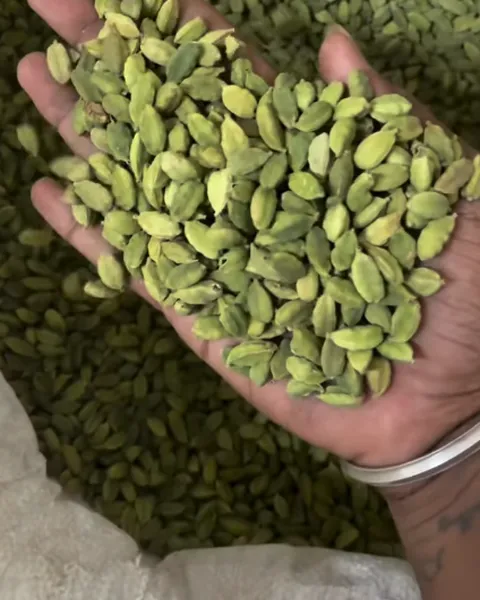 Green Cardamom Wholesale Buying GuidePod size, colour, aroma, splits and landed cost: what to check before buying elaichi in bulk.Read the guide →